
Choosing Safe Eyeliner and Makeup for Lash Extensions
Why Eyeliner Choice Matters with Lash Extensions
Not all eyeliners behave the same way around lash extensions. The wrong formula can break down the adhesive holding your extensions in place and make safe removal much harder on your natural lashes.
Lash extensions are bonded to your natural lashes using a cyanoacrylate adhesive, the same type of glue used in many medical applications. Oil-based eyeliner formulas weaken this bond over time. The oils gradually dissolve the adhesive, causing extensions to fall out faster and unevenly.
Waterproof eyeliners are a common culprit because they often contain oils or waxes to create long-lasting wear. Even a small amount of oil along the lash line can shorten the life of your extensions by days or weeks. The problem compounds at removal, since waterproof formulas require oil-based removers that further attack the adhesive bond.
Oil-free, water-based, and gel eyeliners are the recommended choices for lash extension wearers. These formulas do not break down cyanoacrylate adhesive, and they dissolve in water, allowing gentle removal with a damp cloth or oil-free cleanser without scrubbing.
When shopping, look for products labeled 'oil-free' or 'safe for lash extensions.' Read the ingredient list and avoid products that include mineral oil, castor oil, coconut oil, or lanolin near the top of the list. A felt-tip liquid liner gives a precise line without pressing against the extensions, while a gel liner applied with a thin brush offers good control and easy cleanup.
Apply eyeliner along the upper lash line, above the point where your extensions attach to your natural lashes. A thin, clean line in this location adds definition without contacting the adhesive bond or introducing product into the eye.
Avoid placing eyeliner on the inner waterline, which is the rim just inside your lower lashes. Liner on the waterline can block the meibomian glands, the tiny oil-producing glands in your eyelids that keep your tear film stable. Blocked meibomian glands contribute to dry eye, irritation, and styes, and the risk is higher when extensions are already resting along the lid margin.
Eye Health Risks of Lash Extensions
Lash extensions are a cosmetic procedure that takes place very close to the surface of the eye. Understanding the risks helps you make informed decisions and recognize warning signs early.
Some lash adhesives contain formaldehyde, a known allergen. Exposure can cause contact dermatitis, which appears as redness, itching, and swelling of the eyelids. What makes this particularly unpredictable is that reactions can develop even after months of wearing extensions without any problems. Your immune system can become sensitized over time.
If you have a history of skin allergies or sensitive eyes, speak with your eye doctor before getting extensions. A patch test on a small skin area before a full application can help reveal a sensitivity before it becomes a more serious reaction around the eyes.
The lash extension application process involves working near the eye with adhesive and small tools. In an unsanitary setting or with an inexperienced technician, the risks include corneal scratches, eyelid infections, and injury to natural lashes. Even in professional settings, extensions that are too heavy or too long can pull on your natural lashes and cause traction alopecia, which is hair loss caused by chronic mechanical tension.
Repeated wear without breaks increases the chance that this damage becomes permanent. Thinning or gaps along the lash line that do not recover after removing extensions should be evaluated by your eye doctor to determine the cause and discuss treatment options.
If you develop redness, swelling, pain, discharge, or any change in your vision while wearing lash extensions, contact your eye doctor promptly. These symptoms can indicate infection, corneal injury, or an allergic reaction that requires professional care.
If you have an allergic reaction to extensions, do not try to remove the extensions yourself. Pulling at the adhesive bond can scratch the cornea or damage the delicate eyelid tissue. An eye doctor can safely remove the extensions and treat the underlying reaction with appropriate medication.
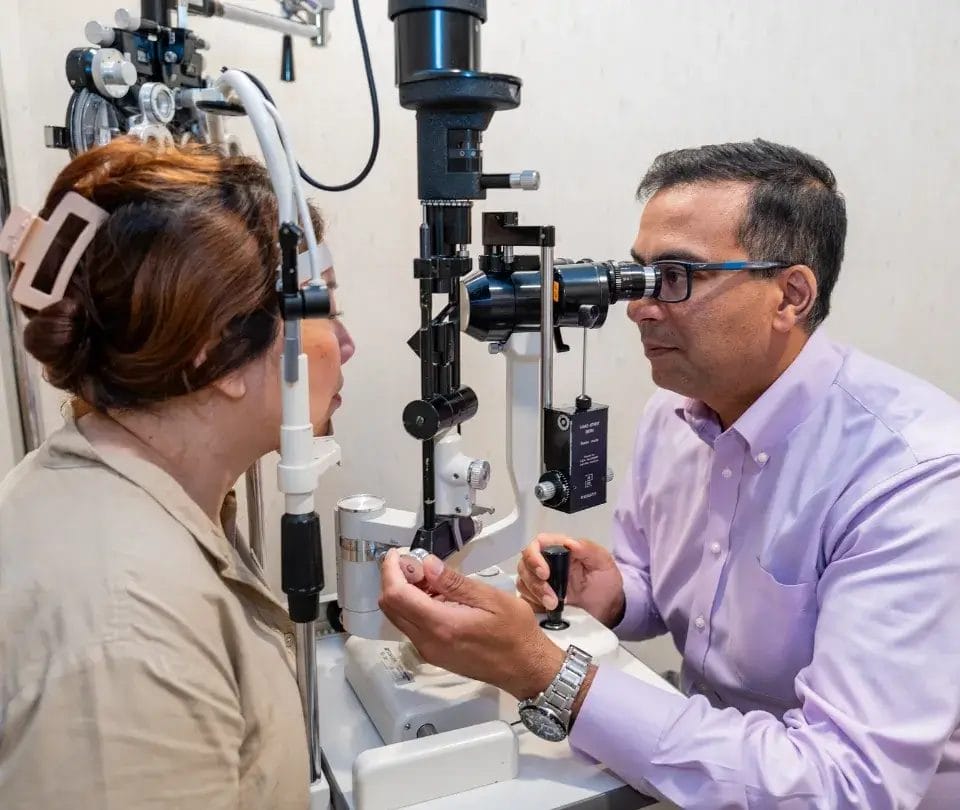
Routine eye exams allow your doctor to monitor your lash line, meibomian gland health, and corneal surface over time. This is especially valuable for people who wear extensions regularly, since some changes develop gradually and are not obvious until they have progressed.
Caring for Lash Extensions Safely
How you care for your extensions between appointments matters as much as the products you use. Consistent daily habits protect your natural lashes, preserve the bond, and reduce the risk of infection.
Clean your lash extensions every day using an oil-free cleanser. Use a soft brush or a clean fingertip to gently work the cleanser along the lash line, moving in a downward direction rather than rubbing side to side. This removes makeup residue, skin oils, and bacteria that accumulate throughout the day.
Skipping daily cleaning allows buildup at the base of the extensions that can cause blepharitis, which is inflammation of the eyelid margin, as well as styes and shortened extension life. After rinsing thoroughly with water, pat the area dry with a lint-free cloth. Avoid cotton pads and balls, which can catch and snag on the extensions.
Certain everyday habits can shorten the life of your extensions or increase your risk of eye problems. Being aware of these from the start saves you from unnecessary damage and expense.
- Avoid oil-based makeup removers, cleansers, and moisturizers near the eye area
- Do not apply mascara to extensions unless the product is specifically formulated for extension use
- Do not rub or pull at your eyes or extensions, even when they feel uncomfortable
- Avoid sleeping face-down, which bends and crushes extensions overnight
- Skip steam rooms and saunas for at least 24 to 48 hours after a fresh application
- Do not use eyelash curlers on extensions, as the clamp can break or dislodge them
Extensions should be applied by a licensed aesthetician working in a clean, sanitary environment using eye-safe adhesives. Ask whether your technician is licensed in your state, whether tools are properly sterilized between clients, and whether extensions are applied one at a time to individual natural lashes rather than in clusters.
Ask specifically what adhesive is used and whether it contains formaldehyde. Medical-grade, formaldehyde-free adhesives are available and carry a lower risk of allergic reaction. A skilled technician will also assess your natural lash length and thickness to select extensions at an appropriate weight, which helps prevent traction damage over time.
Between appointments, take a close look at your natural lashes. Gaps along the lash line, noticeably shorter or thinner natural lashes, or broken stubs where extensions have pulled free are signs that your extensions may be too heavy or that your natural lashes need a rest.
Flaking or persistent redness along the lash line suggests blepharitis, which can develop when makeup and skin cells build up around extension bonds. Your eye doctor can treat blepharitis with targeted lid hygiene and, when needed, medicated drops or ointments. Thinning that does not improve after several weeks without extensions should be evaluated to rule out other causes of lash loss.
Frequently Asked Questions
Here are answers to questions our patients commonly ask about wearing makeup and maintaining eye health with lash extensions.
Most eye makeup is fine as long as it is oil-free and applied carefully. Matte powder eyeshadows are generally the safest option because they do not contain oils and are easy to remove with a gentle rinse. Cream or liquid eyeshadows often contain oils that can migrate toward the lash line, so check ingredient lists before using them. When removing any eye makeup, use an oil-free micellar water or cleanser and apply it with a soft applicator rather than rubbing directly on the extensions.
Each individual extension is bonded to one natural lash and will fall out naturally when that lash sheds, which happens as part of your normal lash growth cycle. The full cycle takes roughly six to eight weeks, meaning you lose a few extensions each day. Most people schedule fill appointments every two to three weeks to keep the look full and even. Extensions last longer when you follow oil-free product guidelines and handle the lash area gently.
When extensions are applied correctly, using appropriate weight and length for your natural lashes, they should not cause permanent damage. The risk rises with heavier or longer extensions, cluster-style application that bonds one extension to multiple natural lashes, or wearing extensions continuously without giving natural lashes a rest. If you notice thinning that continues after a break from extensions, it is worth having your eye doctor evaluate the lash line to determine what is happening and whether treatment is needed.
Start by gently removing eye makeup with an oil-free cleanser and applying preservative-free artificial tears to soothe the eye surface. If the irritation is mild and resolves within a short time, it may be related to a product or minor dryness. However, if you experience persistent redness, pain, swelling, discharge, or any change in vision, contact your eye doctor right away. Do not attempt to remove the extensions yourself, since pulling on the adhesive bond can scratch the cornea or injure the eyelid tissue.
This depends on the severity and cause of your dry eye, and it is a conversation worth having with your eye doctor before getting extensions. Extensions can worsen dry eye by placing physical weight on the lid margin, altering airflow across the eye surface, or contributing to meibomian gland blockage over time. For some patients with mild, well-controlled dry eye, extensions may be manageable with careful hygiene. For others, especially those with meibomian gland dysfunction, the added irritation may not be worth the tradeoff.
A patch test is a practical precaution, especially if you have sensitive skin, a history of contact allergies, or have not worn extensions before. The technician applies a small amount of adhesive to the inside of the wrist or behind the ear and monitors it for 24 to 48 hours. A reaction in that location is a strong indicator of how your skin may respond near the eyes. Even without a prior history of allergies, a patch test adds a reasonable safety step before committing to a full set of extensions.

See Our Team at Rhode Island Eye Institute
If you have concerns about your eye health related to lash extensions or cosmetic products, our team at Rhode Island Eye Institute is here to help. We offer comprehensive eye care across Rhode Island and southeastern Massachusetts, and our eye doctors can evaluate your lash line, corneal health, and eyelid function to make sure your eyes stay healthy. Whether you are experiencing irritation, noticing changes in your lashes, or simply want guidance before your next extension appointment, we welcome you to schedule a visit with us.