
Morning Vision Problems and Diabetes: What You Need to Know
Why Morning Vision Changes With Diabetes
Several things happen to your eyes while you sleep that can affect how clearly you see when you wake up. People with diabetes are more sensitive to these overnight changes because high blood sugar affects the lens, cornea, and blood vessels of the eye in ways that make normal fluid shifts more noticeable.
Your blood sugar can rise or fall significantly during the night depending on your medications, your evening meal, and your body's natural hormone cycles. A phenomenon called the dawn effect causes the liver to release extra glucose in the early morning hours, pushing blood sugar up before you wake. When blood sugar is elevated, the lens of the eye absorbs extra glucose and water, swelling slightly and changing how it focuses light. This swelling produces blurry vision that typically improves once blood sugar comes back down and the lens returns to its normal shape.
Nighttime hypoglycemia, or low blood sugar while you sleep, can also affect morning vision. When blood sugar drops too low, the retina and brain do not receive enough energy to process visual information properly. You may wake up with dim or blurry vision that improves after breakfast as your blood sugar rises. Other signs of overnight low blood sugar include waking with a headache, feeling unrested despite a full night of sleep, or finding your sheets damp from sweating. If you suspect nighttime lows, talk with your diabetes care team about adjusting your medications or eating schedule.
When you lie flat for several hours, fluid redistributes throughout your body. During the day, gravity helps drain fluid away from your head and eyes. In the horizontal sleeping position, more fluid moves toward the eye tissues. For people with diabetes, especially those who already have swelling in the macula (the central part of the retina responsible for sharp vision), this overnight fluid shift can worsen that swelling. You may notice that your central vision is blurriest first thing in the morning and gradually improves as you sit upright and gravity helps drain the excess fluid.
The cornea, which is the clear front surface of your eye, naturally swells slightly during sleep because your closed eyelids reduce the amount of oxygen reaching the corneal tissue. This mild overnight swelling is normal and resolves quickly after waking. However, in people with diabetes, high blood sugar can affect the cells that regulate fluid balance in the cornea, making the overnight swelling more pronounced. This can cause hazier vision, halos around lights, or difficulty focusing until the cornea returns to its normal thickness, which usually happens within thirty minutes to an hour after waking.

Common Morning Vision Symptoms in People With Diabetes
The way morning vision problems present can vary from person to person. Understanding the specific symptoms you are experiencing helps you describe them more clearly to your eye care provider and can point toward the most likely cause.
The most common morning complaint among people with diabetes is blurriness that gradually resolves over the first few hours of the day. This can result from lens swelling caused by elevated overnight blood sugar, fluid accumulation in the macula that is worse in the lying-down position, or corneal swelling that clears as the eye re-oxygenates after waking. If this is a regular pattern for you, it is worth mentioning to your eye doctor, who can check for macular edema and evaluate whether changes to your diabetes management could reduce the morning blurriness.
Seeing rings or halos around lights when you first open your eyes or turn on a lamp can occur when the cornea is swollen or when the lens has shifted shape due to overnight blood sugar changes. The extra fluid in these structures scatters incoming light, creating a ring effect around point light sources like a bedside lamp or hallway light. If halos resolve within an hour of waking, they are most likely related to overnight fluid changes. If they persist throughout the day or are accompanied by eye pain, this could signal elevated eye pressure, which requires prompt evaluation.
Some people with diabetes describe their morning vision as foggy, dim, or like looking through a dirty window. This can happen when blood sugar dropped during the night and the retina did not receive enough glucose to function at full capacity. It can also occur when fluid buildup in the cornea or lens scatters incoming light before it reaches the retina. The foggy quality usually improves as blood sugar stabilizes after breakfast and as the cornea and lens return to their normal state. Keeping a log of your morning blood sugar alongside notes about your vision can help identify whether glucose levels are driving the fogginess.
Rather than a steady improvement from blurry to clear, some people experience vision that shifts back and forth during the first few hours after waking. A moment of clarity may be followed by another episode of blurriness. These fluctuations can reflect changing blood sugar levels as your body processes breakfast and your morning medications take effect. Each shift in blood sugar causes a small change in the lens, which temporarily affects focus. As your blood sugar settles into a more stable range, the fluctuations typically decrease. If this pattern is interfering with your daily routine, working with your care team to smooth out your morning blood sugar curve may help.
Macular Edema and Morning Vision Problems
Diabetic macular edema, a condition where fluid leaks from damaged blood vessels and accumulates in the macula, is one of the most significant causes of morning vision changes in people with diabetes. Understanding how edema behaves overnight helps explain why morning vision can be so different from afternoon vision.
When you lie flat during sleep, the pressure inside the blood vessels of your head and eyes increases slightly. This can push more fluid out of already damaged vessels and into the macular tissue, causing it to swell further overnight. This pattern explains why people with macular edema consistently report worse vision in the morning compared to the afternoon or evening. The macula swells more while you are horizontal and gradually reduces in thickness after you spend time upright and moving around.
The hallmark pattern of macular edema-related morning vision problems is both predictable and position-dependent. Your central vision is blurriest right after waking, improves as you sit up and go about your morning, and tends to be clearest by the afternoon. Colors may look more washed out in the morning and become more vivid as the day progresses. This position-dependent pattern contrasts with blood sugar-related lens changes, which correlate more with your actual glucose readings than with body position. If you notice this pattern, describe it in detail to your eye doctor, as it can help confirm whether macular edema is involved.
Your eye doctor can diagnose macular edema using a scan called optical coherence tomography (OCT), which creates detailed cross-sectional images of the retinal layers to show swelling and fluid pockets within the macula. If your morning vision problems suggest macular edema, your doctor may schedule your scan in the morning or compare morning and afternoon scans to capture how the macular thickness changes with body position. This imaging provides a baseline for monitoring how your macula responds to treatment over time.
If macular edema is the source of your morning vision problems, treatment with anti-VEGF (anti-vascular endothelial growth factor) injections can reduce fluid leakage from damaged blood vessels and decrease swelling in the macula. As the edema resolves, the difference between your morning and evening vision should improve. Successful treatment reduces the overall fluid burden in the macula so that even the overnight worsening that occurs in the lying-down position has less of an impact. Your eye care team will track your progress with regular OCT scans and vision testing.
Blood Sugar Management and Morning Vision
Because overnight blood sugar levels directly influence how your lens and retina function when you wake up, improving overnight glucose control can have a meaningful effect on morning vision clarity. Your diabetes care team and your eye doctor work together to address this from both sides.
Your diabetes care team can help you adjust your evening insulin dose, modify your bedtime snack, or change the timing of your medications to reduce overnight highs and lows. Continuous glucose monitor (CGM) data is especially useful for understanding what your blood sugar does during the hours you are asleep. Many people are surprised to discover how much their glucose fluctuates overnight, and this data allows targeted adjustments that can reduce morning vision instability.
The dawn effect refers to an early-morning rise in blood sugar driven by hormones such as cortisol and growth hormone, which signal the liver to release extra glucose before you wake. If your morning blurriness consistently coincides with high fasting blood sugar readings, addressing the dawn effect may help reduce morning vision changes. Strategies may include adjusting the timing or type of your long-acting insulin, using an insulin pump with programmed rate changes in the early morning, or using medications that specifically target overnight glucose production. Your diabetes care team can identify the right approach for your individual patterns.
What you eat in the evening and how close to bedtime you eat it can affect your overnight blood sugar and, in turn, your morning vision. A high-carbohydrate dinner eaten shortly before bed can cause a delayed blood sugar rise during the night. On the other hand, going to bed without enough food can increase the risk of overnight low blood sugar. Finding the right balance for your evening nutrition, with guidance from your diabetes care team or a registered dietitian, can help stabilize your overnight glucose and reduce morning vision fluctuations.

Practical Steps to Improve Morning Vision
While medical treatment and blood sugar management are the foundation of care, a few practical adjustments to your daily routine can help reduce the impact of morning vision changes. These steps complement, but do not replace, your overall treatment plan.
If fluid accumulation in the eye is contributing to your morning vision problems, sleeping with your head slightly elevated can help. Using an extra pillow or raising the head of your bed by a few inches encourages gravity to reduce overnight fluid pooling in the eye tissues. This is particularly helpful if you have macular edema, as even a small elevation can reduce how much fluid accumulates in the macula overnight. Discuss this simple strategy with your eye doctor to confirm it is appropriate for your situation.
Getting into the habit of checking your blood sugar as soon as you wake up can help you connect the dots between your overnight glucose levels and your morning vision. Recording both your fasting blood sugar and a brief note about your vision quality each morning may reveal a consistent pattern, such as blurry mornings coinciding with higher fasting glucose readings. This log is valuable information for both your diabetes care team and your eye doctor when evaluating treatment and management strategies.
If morning blurriness is a regular part of your experience, plan your mornings to account for it. Avoid tasks that require sharp vision, such as reading fine print or driving, during the first thirty to sixty minutes after waking. For many people with diabetes, vision improves noticeably within an hour of getting up and moving around as the cornea deswells, the lens stabilizes, and macular fluid redistributes with the help of gravity. Knowing that temporary morning blurriness is expected can reduce the anxiety that comes with waking up to unclear vision.
When to Contact Your Eye Doctor
Most morning vision changes in people with diabetes follow a predictable pattern of improvement throughout the day. However, certain changes in that pattern are a signal to seek evaluation sooner rather than later.
If your morning vision problems are becoming more frequent, lasting longer into the day, or growing more severe, schedule an appointment with your eye doctor. Worsening morning blurriness can indicate that macular edema is progressing or that diabetic retinopathy, a condition involving damage to the blood vessels of the retina, is advancing. Your eye doctor can use imaging to assess whether your macula or retina has changed since your last exam and determine whether your current treatment plan needs to be adjusted.
If your morning vision problems are accompanied by new symptoms such as floaters, flashes of light, a shadow or curtain across your vision, or eye pain, seek evaluation promptly. These additional symptoms can indicate complications such as vitreous hemorrhage (bleeding inside the eye), retinal detachment, or elevated eye pressure, all of which go beyond typical morning blurriness. Prompt evaluation allows your eye doctor to rule out or treat these more serious conditions before they have a chance to worsen.
The distinguishing feature of typical morning vision problems in diabetes is that they improve over the first few hours of the day. If your vision remains blurry or impaired without clearing, this may not be related to overnight blood sugar shifts or positional fluid changes alone. Persistent blurriness could indicate advancing diabetic retinopathy, worsening macular edema, cataract progression, or another condition requiring attention. Your eye doctor can perform a comprehensive evaluation to determine the cause and recommend the appropriate next steps.
Frequently Asked Questions
These answers address specific questions about morning vision and diabetes that may not be fully covered elsewhere on this page.
Yes, and this is an important practical concern. If your vision is consistently blurry for the first thirty to sixty minutes after waking, you should wait until your vision has fully stabilized before driving. Lens swelling and corneal changes can affect your ability to judge distance and read road signs clearly. If your vision has not improved to a reliable level by the time you need to leave, talk with your eye doctor about whether your current treatment plan is adequately controlling your morning symptoms.
Yes, always mention them. Subtle morning blurriness that resolves by midday can be an early indicator of subclinical macular edema or unstable overnight blood sugar control, even when your daytime vision seems fine. Your eye doctor can use OCT imaging to detect very early fluid changes in the macula that you might not notice as significant vision loss. Early detection allows treatment to begin before permanent damage occurs, so reporting even minor patterns is always worthwhile.
Good average blood sugar control, reflected in your A1C, does not always prevent overnight fluctuations that affect the eye. Your blood sugar may still rise or fall during specific overnight windows due to hormonal cycles, medication timing, or meal timing, even if your overall control is strong. Additionally, if macular edema or corneal changes are already present from prior periods of higher blood sugar, those structural issues can continue to cause morning symptoms independently of your current glucose levels. Your eye doctor can evaluate whether an underlying structural cause is contributing.
Typical diabetes-related morning blurriness follows a predictable, gradual improvement pattern and does not come with pain, sudden dramatic vision loss, flashing lights, or new floaters. A more serious problem tends to arrive suddenly, affect only one eye, or fail to improve at all. If you notice a sudden loss of vision in one eye, a dark curtain or shadow across your visual field, or a significant increase in floaters accompanied by flashes of light, do not wait to see if it improves. Seek same-day evaluation from your eye doctor or go to an emergency eye care provider immediately.
Yes. People with diabetes develop cataracts (clouding of the eye's natural lens) earlier and more frequently than the general population. A cataract can contribute to blurry, foggy, or glare-affected vision at any time of day, including the morning. Unlike blood sugar-related lens swelling, which fluctuates with glucose levels, cataract-related blurriness tends to be more consistent and progressive over time. If your morning blurriness is not improving with better blood sugar control and is present throughout the day as well, your eye doctor will evaluate whether cataract progression is a factor.
The two conditions can compound each other. The dawn effect causes lens swelling from a blood sugar spike in the early morning, and macular edema worsens overnight from fluid redistribution in the lying-down position. If both are active at the same time, your morning vision may be more significantly affected than it would be from either cause alone. Addressing both, by working with your diabetes care team on the dawn effect and with your eye doctor on the macular edema, gives you the best chance of reducing the overall morning vision burden.
See Our Specialists at Rhode Island Eye Institute
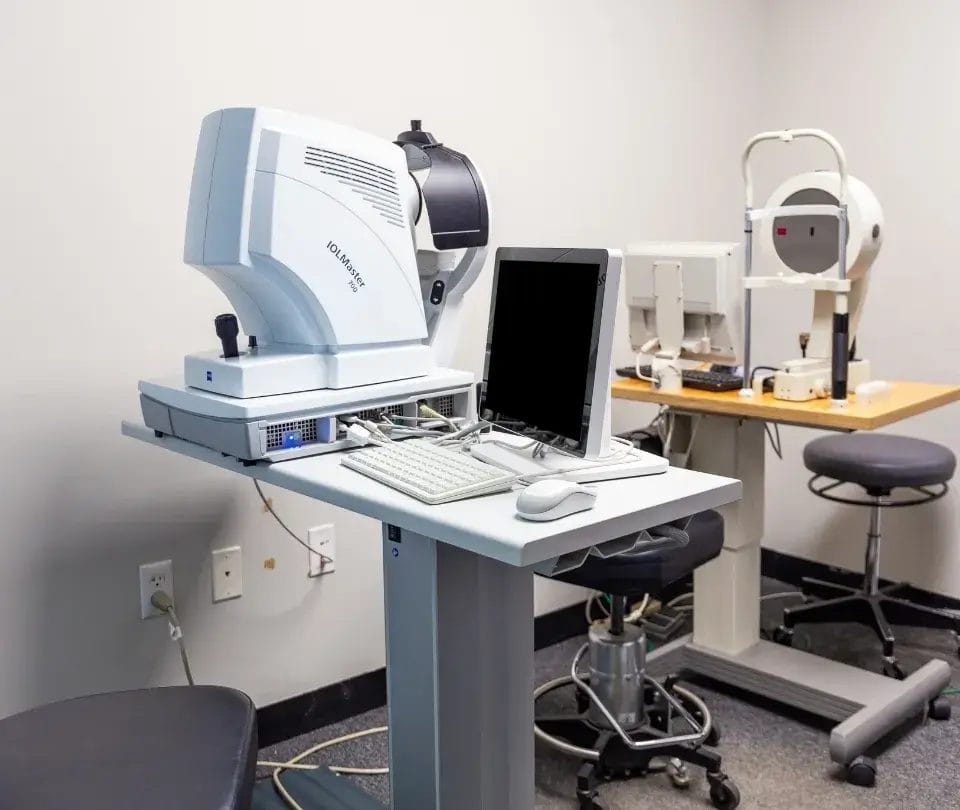
If you are experiencing morning vision changes related to diabetes, our team of retina specialists and comprehensive eye care providers at Rhode Island Eye Institute is here to help you get answers. We offer advanced imaging technology, including OCT scanning, to evaluate your macula and retina with precision, and we work closely with your diabetes care team to coordinate your overall management. Patients throughout Rhode Island trust us with their most complex eye care needs, and we welcome the opportunity to support yours.