
Why Contact Lenses Look Cloudy Right After You Put Them In
What Usually Causes Immediate Cloudiness After Insertion
Most cases of cloudy vision right after putting in a contact lens come down to a handful of common causes. Understanding what is happening at the surface of the lens helps you troubleshoot quickly and know when to call us.
The tear film, the thin fluid layer that keeps your eye moist, contains proteins, oils, and salts. Over time, and sometimes within a single wearing session, these substances deposit on the lens surface and create a layer that disrupts how light passes through the lens. Vision looks foggy or veiled, and you may notice it sharpens for just a moment with each blink before going hazy again. That blink-and-clear pattern is a strong clue that deposits, not a prescription problem, are the cause.
Hand lotion, sunscreen, moisturizer, and even fragrant hand soaps leave a thin oily residue on your fingertips. When that residue transfers to the lens during insertion, the result is instant fogging. Rewetting drops sometimes spread the oil rather than remove it, making vision worse rather than better. The risk is highest when heavy moisturizers or facial products are applied close to the time you handle your lenses.
A soft lens inserted inside out feels slightly off and produces unstable, blurry vision right away. The edge of the lens may brush against the eye with each blink, and the lens tends to shift off-center within minutes. Before insertion, balance the lens on a fingertip and look at it from the side. A correctly oriented lens looks like a smooth bowl with edges that curve gently inward. An inside-out lens has edges that flare outward. Some lens brands include a small printed indicator that reads correctly when the lens is right-side out.
A speck of dust, lint, or dried solution can slip between the lens and the cornea (the clear front surface of your eye) during insertion. The eye reacts quickly with tearing and vision can go cloudy within seconds, often with a scratchy or sharp sensation. Removing the lens, rinsing it with fresh contact lens solution, and reinserting it usually resolves the problem right away.
Less Common but Important Causes
Some causes of cloudy contact lens vision are less obvious and may require a closer look from an Eye Doctor. These situations are worth knowing about, especially if the simple at-home steps do not resolve the cloudiness.
Scleral lenses are larger rigid lenses that vault over the cornea and rest on the white of the eye. They hold a small pool of fluid between the lens and the corneal surface. Over time, debris can build up in that fluid pool and cloud vision, sometimes within the first few minutes of wear. This is known as midday fogging, and it is a recognized challenge in scleral lens fitting. Removing the lens, rinsing the bowl, and reinserting with fresh preservative-free saline often clears vision immediately. Our scleral lens specialists, including Dr. Paul Zerbinopoulos and Dr. Earle Scharff, regularly help patients manage and reduce this issue through customized lens fitting and filling solutions.
The cornea needs a steady supply of oxygen, which it gets partly through the contact lens. When a lens does not allow enough oxygen to pass through, the cornea can swell slightly, a condition called hypoxic edema. Even mild swelling can create haziness and reduce visual sharpness. This is more common with older lens materials, with wearing lenses longer than recommended, or with sleeping in lenses not approved for overnight use. If the cornea was already stressed from the day before, cloudiness can appear almost immediately after a fresh insertion.
Some wearers develop a sensitivity to preservatives found in multipurpose solutions. The reaction often shows up as cloudy or unstable vision shortly after insertion, sometimes accompanied by redness and a mild stinging or burning sensation. Switching to a different solution brand or moving to a preservative-free hydrogen peroxide care system can help. An Eye Doctor can help confirm whether a solution reaction is the true cause or whether something else is producing similar symptoms.
Every contact lens has a recommended replacement schedule for a reason. A two-week lens worn into week three, or a monthly lens extended into week six, loses optical clarity as protein and lipid deposits accumulate faster than daily cleaning can remove them. The lens material also changes over time, becoming less effective at holding moisture. Vision often turns hazy almost from the start of each wearing session when a lens is overdue for replacement. If a brand-new lens from the same box fogs in the same way, the lens itself is likely not the cause, and a visit with us is the next step.
What to Try at Home Before Calling Our Office
Before reaching out, there are several safe and straightforward steps you can take at home to address cloudy lens vision. These steps resolve the majority of cases caused by deposits, debris, or handling issues.
The simplest first step is to remove the lens, rinse it thoroughly with fresh multipurpose solution, and put it back in. Rinsing with solution removes residual protein or lipid film and flushes away any debris. Never use tap water to rinse contact lenses, as tap water can carry microorganisms that may cause serious eye infections.
Many cases of instant cloudiness trace directly back to oily or lotion-coated hands. Washing with plain soap and water, then drying on a clean, lint-free towel, removes most residue before it can transfer to the lens. Soaps with added moisturizers, fragrances, or conditioners are more likely to leave a film on the fingertips, so a simple, unscented bar soap kept near your contact case is a practical choice.
If vision feels strange and the lens seems to move with every blink, take it out and check the orientation. Balance the lens on your fingertip and look at the edge from the side. Correct orientation shows a smooth, cup-like bowl with edges that curve inward. If the edges flare outward, gently flip the lens and check again before reinserting.
If dryness accompanies the cloudiness, a preservative-free rewetting drop designed for contact lens use can help stabilize the tear film across the lens surface. Avoid drops marketed for redness relief or any product that instructs you to remove lenses before use. These can contain ingredients that interact poorly with lens material and may worsen the fogging rather than help it.
If rinsing and checking the orientation do not solve the problem, discard the lens and try a fresh one from the same box. Some lenses have subtle surface defects that are not visible to the naked eye. If a brand-new lens produces the same cloudiness, that rules out the lens itself and points to a cause that needs an in-office evaluation.
How Our Team Finds the Cause
When at-home steps do not resolve cloudy lens vision, a visit with one of our Eye Doctors or our optometry team gives a much clearer picture of what is happening. We use several tools to track down the cause efficiently.
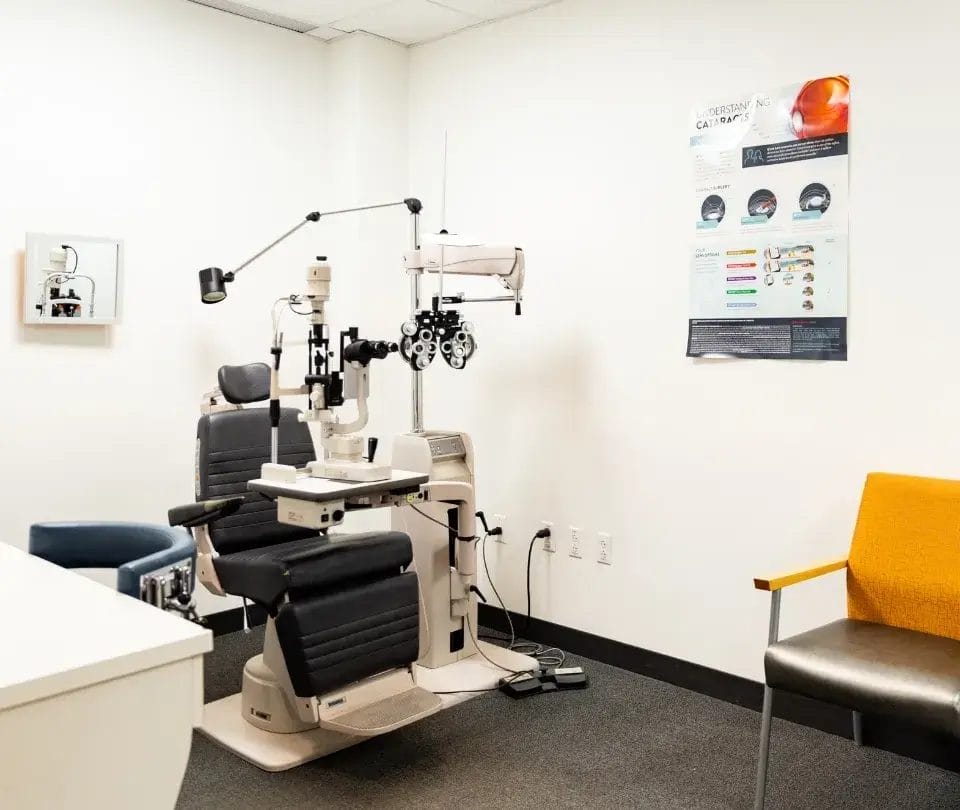
A slit lamp is a specialized microscope that allows our team to examine the lens on the eye in detail. We can see how the lens centers on the cornea, how it moves with each blink, and whether the surface shows visible deposits, scratches, or damage. We also examine the cornea itself for signs of swelling, surface erosions, or early infection. Most causes of immediate cloudiness become apparent within minutes of this exam.
If the lens looks clean and undamaged, our team looks more closely at the tear film and eyelids. Dry eye disease, meibomian gland dysfunction (a condition where the oil-producing glands along the eyelid margin do not work properly), and eyelid inflammation can all prevent the tear film from spreading smoothly across the lens. A disrupted tear film causes hazy vision that returns seconds after each blink. We may use a safe dye called fluorescein to highlight the tear film and make it easier to evaluate.
Our optometry team, including Dr. Paul Zerbinopoulos, Dr. Earle Scharff, and Dr. Lori Boivin, has extensive experience fitting specialty lenses for patients with conditions like keratoconus, dry eye, post-surgical corneas, and high prescriptions. If deposits or solution reactions are contributing to cloudiness, switching lens materials, care systems, or lens types can make a significant difference. A move from a hydrogel lens to a silicone hydrogel, or a switch to daily disposables, may resolve the issue entirely. We base these decisions on what we see during the exam, not a one-size-fits-all approach.
Sometimes the lens is not the root cause at all. Conditions like blepharitis (inflammation along the eyelid margins), allergic conjunctivitis, or an early eye infection can make any lens feel cloudy and uncomfortable. If cloudiness is accompanied by pain, redness, light sensitivity, or reduced vision that does not improve, please stop wearing your lenses and contact our office promptly. These symptoms can indicate a more serious issue that needs evaluation before lens wear can safely continue.

When to See an Eye Doctor Right Away
Most cloudy lens episodes are harmless and resolve with the steps described above. However, certain symptoms mean it is time to stop wearing your lenses immediately and seek same-day care.
If any of the following occur, remove your lenses right away and contact our office or seek urgent eye care the same day. Do not wait for a routine appointment.
- Eye pain that grows worse over an hour or more
- Redness that does not clear within 30 minutes after removing the lens
- Significant sensitivity to light, even indoors
- Reduced vision that remains after rinsing and reinserting the lens
- Thick, colored, or unusual discharge from the eye
These signs can point to corneal swelling, infection, or another condition that requires prompt treatment. Continuing to wear lenses through these symptoms can make the situation significantly worse.
Other patterns are worth discussing at your next scheduled appointment but do not need urgent attention. Mild fogging that clears with a careful rinse, end-of-day haziness that goes away overnight, and occasional foggy days during allergy season are common and very treatable. Bringing these up at your next visit gives our team the opportunity to adjust your lens material, replacement schedule, or care routine before the issue becomes more disruptive.
Bringing a few items to your visit helps our team get to the cause faster. Try to bring the current lens box, any unopened lenses from the same batch, your multipurpose solution bottle or hydrogen peroxide system, your lens case, and a list of any eye drops or rewetting drops you use regularly. A quick note about recent changes, such as a new hand soap, a new makeup product, or a new medication, can also speed up the search considerably.
Frequently Asked Questions
Here are answers to questions we hear often from contact lens wearers dealing with cloudy vision. These are meant to help you decide what to do next and when to reach out to us.
Cloudiness in a single eye usually points to a lens-specific problem rather than a tear film or systemic issue. The affected lens may be older, torn, or have debris trapped beneath it. Try removing and rinsing that lens while leaving the other in place. If the cloudiness improves after reinsertion, debris or a surface deposit was likely the cause. If it persists or returns immediately, replace that lens with a fresh one. If a new lens produces the same cloudiness in the same eye, schedule an appointment so we can examine the cornea and tear film on that side more closely.
This blink-and-clear pattern is one of the clearest signs that either the tear film or lens surface is the issue, not the prescription itself. Blinking temporarily spreads fresh tear fluid across the lens, smoothing out any irregularity for a moment. As the tear film thins again, the haze returns. This pattern most often points to surface deposits, dry eye disease, or meibomian gland dysfunction. Our team can determine which factor is driving it and recommend the right correction, whether that is a lens material change, a dry eye treatment, or a care system adjustment.
Midday fogging in scleral lens wearers is a known challenge, and it does not mean you need to give up scleral lenses. The fluid pool that sits between the lens and the cornea can accumulate debris from the eye's natural secretions, and this causes the foggy vision. In many cases, using a thicker preservative-free artificial tear in the bowl at insertion reduces or delays fogging. Your filling solution choice, lens fit, and lens cleanliness at insertion all matter. Our scleral lens specialists, Dr. Paul Zerbinopoulos and Dr. Earle Scharff, work with patients to optimize these variables for each individual eye.
Daily disposable lenses do eliminate most deposit-related cloudiness because each day starts with a brand-new lens that has never accumulated protein or oil buildup. However, daily lenses are not the right fit for every patient. Prescription range, corneal shape, lens availability, and cost are all factors that matter. If cloudiness has been a recurring issue and you are curious whether daily lenses would help, bring that question to your next visit. Our team can assess whether a switch makes clinical sense for your eyes and your lifestyle before making any changes.
Contact lens solution loses its disinfecting effectiveness over time. If lenses have been sitting in the same solution for more than the time listed on the solution packaging, they should be cleaned again with fresh solution before wearing or replaced entirely. The lens itself can also develop a surface film during extended storage. If a freshly cleaned lens still appears cloudy or uncomfortable after a storage period, discard it and use a new one. Using a contaminated or ineffectively stored lens carries a risk of eye infection that is not worth taking.
A prescription error typically causes consistent blurriness at a particular distance rather than the hazy, variable, or film-like cloudiness described on this page. If your vision is uniformly blurry at all distances, seems off even with freshly cleaned lenses, or has changed since your last exam, a prescription update may be the right step. The blink-and-clear pattern, foggy-then-clear cycles, or cloudiness that resolves with a rinse all suggest a lens surface or tear film issue rather than a prescription mismatch. Our team can test both possibilities at a single visit.
Schedule a Lens Comfort Visit at Rhode Island Eye Institute
Cloudy contact lens vision is a fixable problem, and it should not be something you simply learn to live with. At Rhode Island Eye Institute, our optometry team brings deep specialty lens experience across soft lenses, RGP lenses, scleral lenses, and everything in between, so we can quickly identify what is causing your cloudiness and make the right adjustments. We welcome patients from across Rhode Island and southeastern Massachusetts who are ready to see clearly and comfortably from the first moment their lenses go in.