
Caring Doctors.
Clearer Vision.
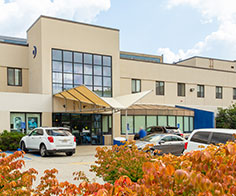
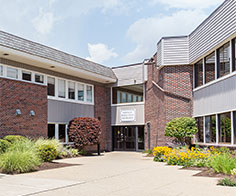
Rhode Island Eye Institute brings together fellowship-trained ophthalmologists and experienced optometrists across four locations in Rhode Island and southeastern Massachusetts. From routine eye exams to advanced surgery, our team delivers expert care for every stage of life.
Our Services
Our Doctors
View All ExpertsVisit Us in Rhode Island and Southern Massachusetts
Rhode Island Eye Institute Providence
Tuesday: 8 am–5 pm
Wednesday: 8 am–5 pm
Thursday: 8 am–5 pm
Friday: 8 am–5 pm
Saturday: Closed
Sunday: Closed
Rhode Island Eye Institute East Providence
Tuesday: 8 am–5 pm
Wednesday: 8 am–5 pm
Thursday: 8 am–5 pm
Friday: 8 am–5 pm
Saturday: Closed
Sunday: Closed
Rhode Island Eye Institute Fall River
Tuesday: 8 am–4 pm
Wednesday: 8 am–4 pm
Thursday: 8 am–4 pm
Friday: 8 am–4 pm
Saturday: Closed
Sunday: Closed
Rhode Island Eye Institute South Kingstown
Tuesday: 8 am–5 pm
Wednesday: 8 am–5 pm
Thursday: 8 am–5 pm
Friday: 8 am–5 pm
Saturday: Closed
Sunday: Closed
The Practice Doctors Choose for Their Families
With multiple fellowship-trained subspecialists under one roof, our team coordinates across specialties so you get seamless care without outside referrals. Backed by 1,800+ Google reviews and a 4.6-star average rating, Rhode Island Eye Institute is where patients and physicians alike trust their vision.
Expert Eye Care at Every Age
Kids
Building Healthy Vision Habits
Protecting your child's sight with gentle exams, myopia management, and specialized care for learning-related vision issues.
Adults
Protecting Your Vision at Midlife
Comprehensive exams, contact lens fittings, and expert management of dry eye, allergies, and diabetic eye conditions.
Seniors
Advanced Care for Lasting Clarity
Advanced cataract surgery, glaucoma, dry eye, macular degeneration, and treatments to ensure great vision for life.
Retina Experts
Our retina team delivers dual-fellowship subspecialty depth across medical retina, surgical retina, and uveitis — so anti-VEGF injections, laser, vitrectomy, and inflammatory eye disease are all handled under one roof. Dr. Gaurav Gupta (Northwestern vitreoretinal fellowship, Brown University faculty, with RIEI since 2009) and Dr. Pranjal Thakuria (Duke medical retina, MERSI Foster uveitis fellowship) cover the full retinal disease spectrum so you don't need to travel to a Boston academic center.

Flashes, Floaters & Retinal Detachment
A sudden burst of new floaters, flashes of light in your peripheral vision, or a dark curtain or shadow moving across your sight can signal a retinal tear, vitreous hemorrhage, or rhegmatogenous retinal detachment. All three are time-sensitive — the sooner we evaluate you with a dilated exam and OCT, the more options we have to protect your central vision.
Many retinal tears caught early are sealed in our office with laser retinopexy or cryotherapy. For retinal detachment, Dr. Gupta selects pneumatic retinopexy, scleral buckle, pars plana vitrectomy, or a combined procedure based on the type and location of your detachment. If you have new flashes, a shower of floaters, or a shadow in your sight, call us right away for a same-day or next-day appointment.
Macular Degeneration & Geographic Atrophy
Age-related macular degeneration is a leading cause of central vision loss after age 60, and treatment depends on whether the disease is wet or dry. For wet AMD, we offer current-generation anti-VEGF injections — Eylea HD, Vabysmo, Lucentis, Avastin, and FDA-approved biosimilars — using treat-and-extend protocols designed to safely reduce how often you need to come in.
For dry AMD with geographic atrophy, the FDA-approved complement inhibitors Syfovre and Izervay are now available, a major advance since 2023. We also counsel on AREDS2 supplementation, smoking cessation, and home Amsler grid monitoring, and use OCT and OCT angiography at every visit to catch conversion to wet AMD before reading or driving vision is affected.
Diabetic Retinopathy, Macular Edema & Vein Occlusion
Diabetic retinopathy is the leading cause of preventable blindness in working-age adults, and diabetic macular edema (DME) and retinal vein occlusions (BRVO and CRVO) share many of the same treatments. Anti-VEGF injection therapy is first-line for DME and vein-occlusion macular edema, with intravitreal corticosteroid implants (Ozurdex, Iluvien) reserved for refractory or pseudophakic eyes.
For proliferative diabetic retinopathy, we offer panretinal photocoagulation (PRP), focal laser, and pars plana vitrectomy for non-clearing vitreous hemorrhage or tractional retinal detachment. We work closely with your primary care doctor and endocrinologist so retinal treatment, blood sugar, and blood pressure are managed as one coordinated plan.
Vitreoretinal Surgery, Uveitis & Advanced Imaging
Macular hole, macular pucker (epiretinal membrane), vitreous hemorrhage, posterior-segment trauma, and chorioretinal tumors are managed with pars plana vitrectomy and membrane peel — an outpatient procedure that often produces excellent visual recovery. Dr. Gupta brings Northwestern vitreoretinal fellowship training and 15+ years of surgical experience, with deep familiarity with the local hospital systems and regional referral network.
Uveitis and inflammatory retinal disease usually prompt a referral to Boston academic centers; at RIEI, Dr. Thakuria's MERSI Foster uveitis fellowship and Duke medical retina training keep posterior uveitis, intermediate uveitis, and panuveitis close to home. Our advanced imaging suite — optical coherence tomography (OCT), fluorescein angiography, and OCT angiography — supports diagnosis and treatment monitoring across every retinal condition we treat.
Patients
Feedback
Reviews
(1953)Look as Vibrant as You Feel
Smooth out crow's feet and forehead lines with Botox. Refresh tired, hollow under-eyes with Restylane or Juvederm. Lift heavy, droopy lids with cosmetic blepharoplasty. Every treatment is performed by Dr. Hofmann, an eye surgeon with 30+ years of aesthetic experience, so you get beautiful results from someone who knows the delicate area around your eyes better than anyone.
Frames & Advanced Lenses
Our full-service optical boutique pairs designer frames in styles for every personality with the latest lens technology and coatings, at both our Providence and South Kingstown locations.
Visit Our Optical
Contact Lenses For Every Eye
From standard daily and monthly contacts to specialty fittings for keratoconus, severe dry eye, and myopia management, expertly handled by our contact lens team.
Contact Lenses
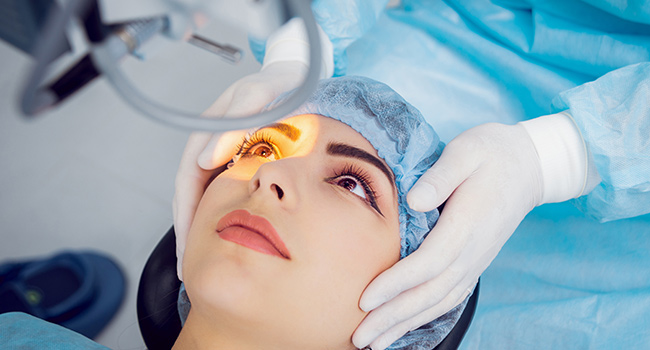
Rhode Island Eye Institute offers LASIK, PRK, and refractive lens exchange for adults who want to reduce their dependence on glasses or contact lenses. Dr. Elliot Perlman has performed LASIK since 1994 and works alongside Dr. Christopher Newton (refractive surgery fellowship, University of Minnesota) and Dr. Jane Cook (Bascom Palmer fellowship). A consultation with corneal topography, pachymetry, and wavefront analysis determines whether LASIK, PRK, or another option fits your eyes, prescription, and lifestyle.
- Myopia, hyperopia, and astigmatism correction
- LASIK and PRK with excimer and femtosecond laser platforms
- Refractive lens exchange for patients outside the LASIK range
- Limbal relaxing incisions and combined cataract-refractive procedures
- Keratoconus screening and CXL stabilization before refractive surgery
- Post-LASIK complication management and dry eye optimization
Our cornea program is led by Director of Corneal Service Dr. Elliot Perlman (the first ophthalmologist in Rhode Island to offer FDA-approved corneal cross-linking), Dr. Jane Cook (Bascom Palmer fellowship, AI corneal diagnostics research), and Dr. Christopher Newton (external disease and refractive surgery fellowship). Optometrists Dr. Paul Zerbinopoulos and Dr. Earle Scharff handle scleral and specialty contact lens fitting, so patients move smoothly between non-surgical management and surgical care.
- Keratoconus, Fuchs' dystrophy, and corneal ectasia
- Corneal cross-linking (CXL) to halt keratoconus progression
- DMEK, DSEK, and full-thickness corneal transplantation
- Pterygium excision with conjunctival graft
- Scleral and rigid gas permeable lens fitting for irregular corneas
- Corneal infections, ulcerations, and ocular surface tumors
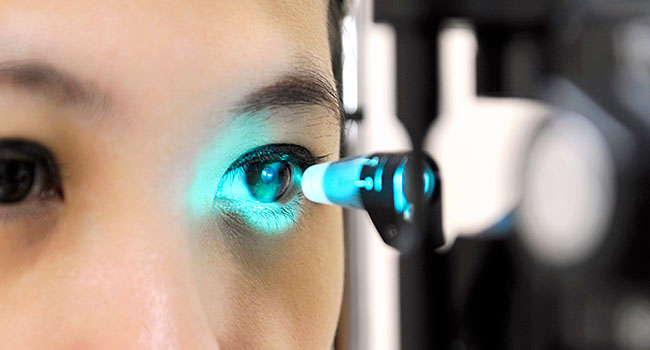
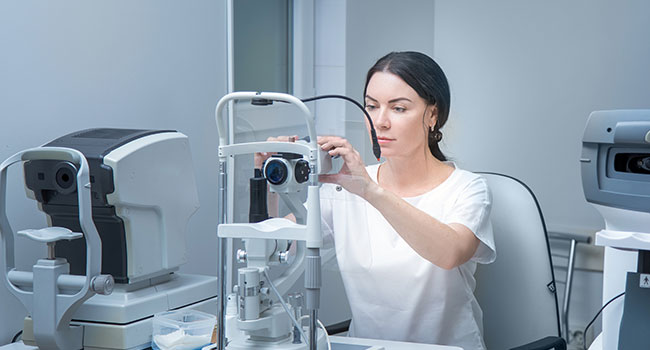
Sudden vision loss, a new shower of floaters, flashes of light, a curtain or shadow across your sight, an eye injury, new double vision, or severe eye pain should be evaluated the same day. Our team of ophthalmologists and optometrists offers urgent slit-lamp evaluation, dilated fundus exam, and OCT imaging across all four locations. After-hours and weekend coverage is coordinated through our on-call physician.
- Flashes, new floaters, or a shadow in vision (possible retinal tear or detachment)
- Sudden, painless vision loss in one eye (possible vein or artery occlusion)
- Eye trauma, chemical splash, or persistent foreign body sensation
- Severe eye pain with redness, halos, or nausea (possible angle-closure glaucoma)
- New double vision, drooping eyelid, or unexplained pupil change
- Red eye with discharge, light sensitivity, or contact-lens-related infection
Glaucoma damages the optic nerve quietly, often without symptoms until vision is already lost, which is why early diagnosis and consistent monitoring matter. Our team includes a fellowship-trained glaucoma surgeon (Wilmer Eye Institute, Johns Hopkins) and uses tonometry, gonioscopy, automated visual field testing, OCT of the optic nerve, and stereoscopic disc photography. Treatment is staged from drops to laser to surgery based on disease type and progression.
- Open-angle, angle-closure, pseudoexfoliative, and pigmentary glaucoma
- Topical medication regimens and adherence support
- Selective Laser Trabeculoplasty (SLT) and laser iridotomy
- MIGS (micro-stent implants) at the time of cataract surgery
- Trabeculectomy and tube shunt surgery for advanced disease
- Combined cataract-glaucoma surgery with premium IOL options
Children's eyes change rapidly, and conditions caught early often respond better to treatment. Our pediatric ophthalmologist Dr. John Donahue (fellowship at Children's National Medical Center, PhD in microbiology and immunology, Clinical Assistant Professor at Brown) cares for infants, children, and adults with strabismus, working closely with our optometry team on myopia control, glasses, and amblyopia therapy. The South Kingstown office is set up for special needs eye care.
- Strabismus (eye misalignment) in children and adults
- Amblyopia (lazy eye) and patching therapy
- Nasolacrimal duct obstruction with probing and intubation
- Retinopathy of prematurity screening
- Pediatric cataract surgery and contact lens fitting for aphakia
- Myopia control, glasses, and developmental vision care
Dry eye is more than discomfort. Untreated, it can blur your vision, irritate your eyelids, and undermine cataract or LASIK outcomes. Our team of corneal specialists and optometrists evaluates the tear film with meibomian gland imaging, tear osmolarity, and ocular surface staining, then builds a plan that fits the cause: aqueous deficiency, evaporative dry eye, eyelid disease, or post-surgical surface dysfunction. Treatment usually combines in-office therapy with at-home routines.
- Evaporative dry eye and meibomian gland dysfunction (MGD)
- Aqueous-deficient dry eye and Sjogren's-related ocular surface disease
- Blepharitis and eyelid hygiene programs
- Pre and post-operative ocular surface optimization for cataract and LASIK
- Scleral and moisture-retention contact lenses for severe dry eye
- Dry eye linked to keratoconus, eyelid malposition, or thyroid eye disease